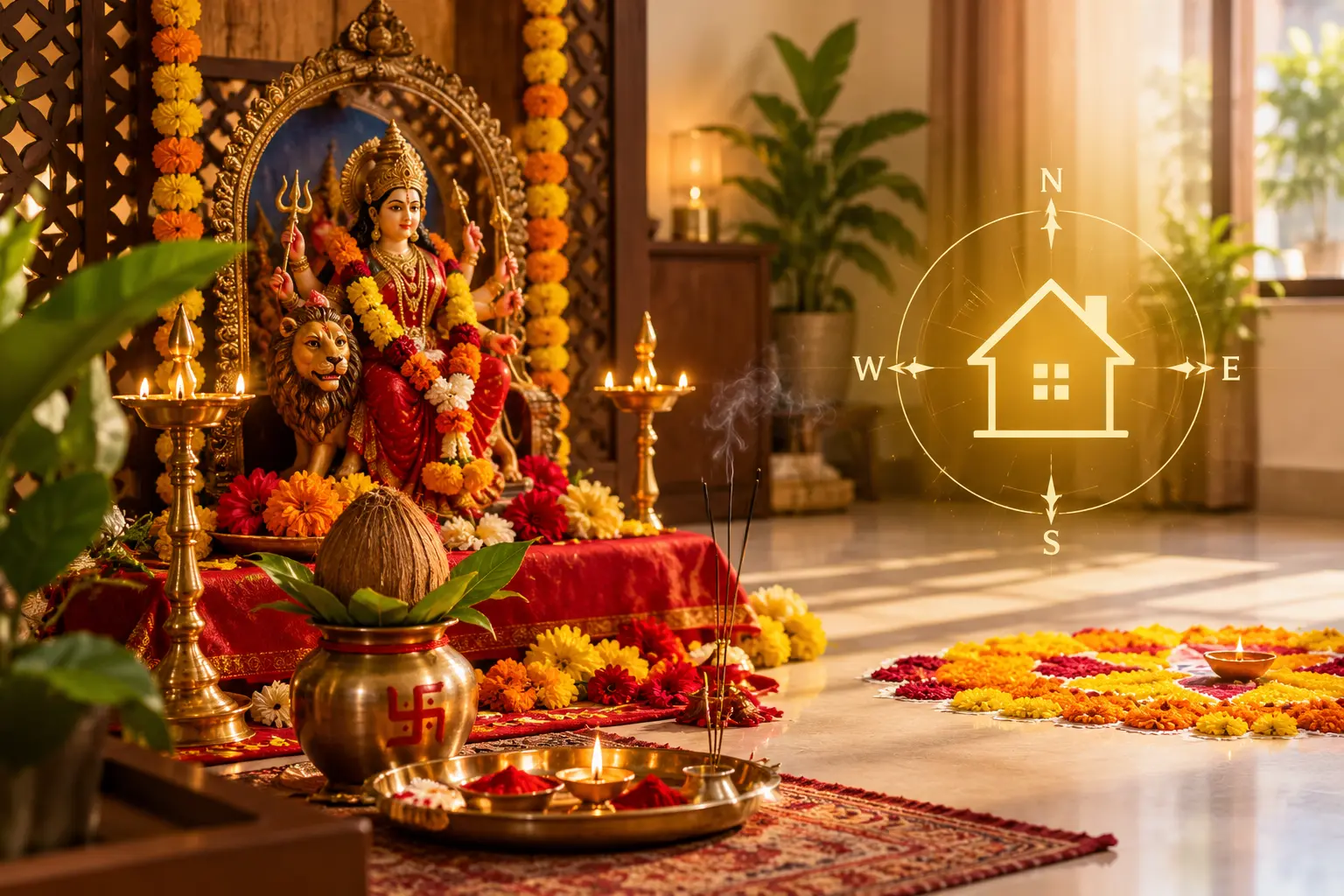
Vastu Tips For Navratri Pooja: To Bring Positive Energy To Your Home
vastu tips for navratri pooja are simple: clean and declutter the home before ghatasthapana, set up the pooja in the north east or east, place the Durga idol facing west or south so you pray facing east or north, keep the kalash in the north east and the diya in the south east, and decorate the main door with a fresh mango leaf toran and a swastika. Add a tulsi plant, use brass, copper or clay items instead of plastic or iron, keep the kitchen clean for fasting meals, and follow a short daily routine of morning aarti, fresh flowers and an evening lamp. Even in a rented flat, a clean table in the east or north of the living room is enough to follow these navratri vastu tips for all nine days.
Why vastu for navratri matters?
navratri is the one festival where the entire house turns into a place of worship for nine days. People sit in the pooja area for longer than usual, lamps stay lit for hours, guests arrive every evening, and the kitchen runs on a fasting menu. Because the home is used differently, small layout problems that you ignore all year suddenly become visible. A cluttered passage, a dark pooja corner or an idol placed against a bathroom wall can make the whole ritual feel rushed.
Vastu for navratri works as a simple checklist for that situation. It tells you where to place the idol, where fire belongs, where water belongs, which direction to face and which zones to keep open. Whether you follow it as a belief, a tradition or just a tidy way to organise the festival, the steps are easy, cost very little and can be done in a single weekend before ghatasthapana. Good navratri pooja vastu keeps the festival simple, clean and easy to follow.
Vastu Tips for Navratri Pooja at a Glance
Here are the key Navratri Vastu tips at a glance.
- clean and declutter every room, starting with the entrance and the pooja area
- set up the pooja in the north east or east of the home
- place the Durga idol so you face east or north while praying
- keep the kalash in the north east and the diya in the south east
- decorate the main door with a fresh mango leaf toran and a swastika
- keep a tulsi plant in the north east or east corner if you have space
- use brass, copper, clay or wood for pooja items
- keep the pooja area bright, clean and free of clutter for nine days
Navratri Vastu Tips for Cleaning and Decluttering Before Ghatasthapana
start with the house, not the idol. Vastu treats clutter as blocked movement, so the first task is to clear old newspapers, broken items, expired medicines, unused boxes and torn clothes from every room. Give extra time to the places people pass through every day: the entrance, the corridor, the staircase and the balcony.
the entrance. The main door is where energy enters the home, so it should be clear and well lit. Move shoe racks and dustbins away from the door, repair any squeaky hinge, and make sure the nameplate and doorbell are clean.
the pooja area. Empty the corner completely. Wash the platform or wipe it with a damp cloth, and replace old cloth, dried flowers and burnt wicks. If the pooja area is also used as storage for files, bags or cartons, shift them to another room for the nine days.
the kitchen. Since fasting meals are prepared here, wipe the stove, clean the exhaust, and discard expired groceries. In vastu the kitchen is linked to fire, so a clean stove matters more than any decoration.
the bedrooms. Clear the space under the bed and tidy wardrobes. Nobody prays in the bedroom, but a calm bedroom helps people wake up early for the morning aarti.
Once the cleaning is done, sprinkle a little Ganga jal in each room, starting from the north east and ending at the main door. This is a traditional way of marking the home as ready for the festival. These navratri vastu tips for cleaning cost nothing and set the tone for the festival.
Navratri Pooja Vastu For The North East Pooja Space
The north east, known as Ishan kona, is the preferred direction for any puja in vastu. It is considered the zone of clarity and devotion, so a pooja set up here is believed to support concentration and calm during prayer. If your home already has a mandir in the north east, keep the area open and well lit, and avoid storing heavy items on or near it. For a full guide on placing a permanent temple, see our blog on mandir direction in home .
If you do not have a dedicated pooja room, you can still follow vastu for navratri with a temporary arrangement:
- place a clean wooden chowki or a small table in the north east or east of the living room
- cover it with a red or yellow cloth
- keep the platform slightly raised from the floor, about waist or chest height when you sit
- make sure there is a clear walking space of a few feet in front of it
- keep the area away from the bathroom wall, the shoe rack and the staircase
A well lit pooja corner is important. Open the curtains in the morning, and add a soft warm lamp for the evenings, so the area feels alive during aarti. Following vastu tips for navratri pooja here gives the whole festival a steady base.
Vastu Tips for Navratri Pooja: Durga Idol and Kalash Placement
Place the Durga idol or photo on a raised, clean platform. Vastu suggests that the idol should face west or south, so that you face east or north while praying. Keep a small gap between the wall and the idol so there is room for a diya and a bell.
For a more detailed guide on idol positioning, read durga idol direction as per vastu .
the kalash. The kalash is placed slightly to the right of the idol, in the north east of the pooja area. Fill it with clean water, add a few strands of durva grass, a coin and some rice, then place mango leaves around the mouth and a coconut wrapped in red cloth on top. Keep the kalash on a small heap of rice or grain, and do not move it during the nine days. Correct kalash placement is one of the most important navratri pooja vastu rules.
the idol size. Keep the idol of a modest size, so it does not overpower the pooja space. A smaller idol on a neat platform looks better than a large one squeezed into a corner.
the barley bed. Many families sow barley or wheat seeds in a clay pot beside the kalash. Water it lightly each morning. Green sprouts by the ninth day are traditionally seen as a sign of prosperity. Keep the pot in the north east or east of the pooja area and away from direct heat.
Navratri Puja Tips For Lamps, Akhand Jyoti and The Fire Element
In vastu, fire belongs to the south east. This is why the diya, incense stand and any akhand jyoti are placed in the south east part of the pooja unit or table. The idea is simple: keep water in the north east and fire in the south east, so the two elements stay balanced. Among all navratri puja tips, lamp safety comes first.
- use pure ghee or sesame oil for the diya
- place the lamp on a small plate so the flame stays steady
- keep the lamp away from curtains, paper decorations and the idol’s cloth
- use a thick cotton wick and trim it every day
- never leave an open flame unattended for long periods
akhand jyoti. If your family keeps an akhand jyoti for nine days, plan the care in advance. Choose a spot in the south east of the pooja area, use a deep lamp with enough ghee or oil, keep a spare wick ready, and assign a family member to check on it at regular intervals. If the flame goes out by accident, relight it calmly and continue the prayer. Many families choose a simple diya for each aarti instead, which is also perfectly acceptable.
Vastu for Navratri: Decorate The Entrance with Toran and Swastika
the main door is the first thing guests and the Goddess see, so decorate it first. Vastu for navratri begins at the main door. Hang a fresh mango leaf toran above the door frame, and replace it when the leaves dry. Mango leaves are used in many pujas, and vastu considers them a symbol of growth and good fortune. Marigold garlands can be added to the toran for colour.
Draw a swastika in kumkum or rangoli near the entrance. The swastika is an auspicious symbol in vastu, and drawing it on or near the main door is a traditional way of welcoming positive energy. Keep the doorstep clean, and wipe it every morning before drawing rangoli.
Add a small diya near the entrance in the evening. A softly lit entrance also feels welcoming for guests who come for darshan.
Navratri Vastu Tips for Rangoli and Floor Decoration
rangoli at the entrance is a long standing navratri tradition. Use rice flour, flower petals or natural colours. Vastu prefers simple, symmetrical designs at the main door, with lotus, kalash or swastika patterns being common choices. Avoid placing rangoli right in the path of shoes, and sweep it away gently each morning before making a fresh one.
Navratri Pooja Vastu for Tulsi, Flowers and Plants
A tulsi plant in the north east or east corner of the balcony or courtyard is considered auspicious during navratri. Water it in the morning, and light a diya near it in the evening if space allows. Keep the pot clean and remove dried leaves regularly. Among simple navratri vastu tips, the tulsi plant is the easiest to add.
Fresh flowers are important for the pooja. Red hibiscus, marigold and lotus are commonly offered to the Goddess. Remove wilted flowers every day, since vastu discourages keeping dried flowers in the pooja area. If you want to add indoor plants for the festival, choose healthy, green plants and place them in the north or east of the living room.
Vastu Tips for Navratri Pooja: Colours for the Nine Days
vastu suggests soft and calm colours for the pooja backdrop. Light yellow, pale pink, cream and light green are commonly recommended, because they feel bright without being loud. Vastu for navratri prefers soft, calm shades. Red is used for the cloth, tilak and chunri, and is associated with Shakti, but it works best as an accent rather than on the whole wall.
For the day wise navratri colours that people wear and decorate with, follow the daily colour list, and keep the pooja backdrop simple so it does not compete with the idol. If you are painting a wall before the festival, choose a light shade for the pooja wall and avoid dark grey or black.
Navratri Puja Tips: Which Direction to Face While Praying
sit on a clean aasan facing east or north while you pray, chant or read the Durga Saptashati. This is the reason the idol is placed facing west or south. East is the direction of the rising sun, and north is linked with calm and focus, so both are preferred for prayer. Among navratri puja tips, facing the right direction costs nothing.
- avoid sitting with your back to the main door
- keep the aasan slightly raised from the floor
- use a woollen or cotton aasan, not plastic
- keep your phone away from the pooja area during aarti
If space is tight, even a small corner works. What matters is the direction you face, not the size of the room.
Clothing and Personal Preparation
vastu is not only about the house. Many families also follow simple personal rules for navratri: bathe before the morning pooja, wear clean clothes, and keep the head covered if that is your family custom. These habits help create a calm start to the day, and children also learn to treat the pooja as something special.
Navratri Vastu tips for Materials to Use and Avoid
brass, copper, clay and wood are the preferred materials for the diya, lota, bell and idol stand. They are traditional, easy to clean and look good in a pooja setting. A clay diya, a brass bell and a copper lota instantly give the setup a more traditional feel.
Vastu discourages plastic and iron for pooja items, as it favours natural materials. That is why vastu for navratri prefers natural materials. Avoid chipped or cracked idols, broken diyas and torn cloth on the platform. If an item is damaged, replace it before the festival begins.
Navratri Pooja Vastu for Sound and Fragrance
ring a bell and blow the conch at the start and end of the aarti. In vastu, sound marks the beginning and end of the ritual and gives the household a shared moment of focus. Among navratri puja tips, bell and conch sound is the easiest to follow. Light dhoop or guggul in the north east or east, and keep a window slightly open for ventilation. Use a small amount of incense, since heavy smoke in a closed room is uncomfortable, especially for children and elderly family members.
Sandalwood paste for tilak is also widely used during navratri. Keep a small bowl in the pooja area, and apply it before the aarti.
Vastu for Navratri Kitchen During Fasting
many families fast during navratri, so the kitchen is busier than usual. Vastu tips for navratri pooja also cover the fasting kitchen. Vastu places the kitchen in the south east, and the stove in the south east corner of the platform if possible. Face east while cooking, since that is the direction recommended for the person preparing meals.
- keep fasting ingredients such as kuttu, sabudana and sendha namak in a separate, clean shelf
- use separate utensils for fasting food if your family follows that tradition
- keep the sink and stove apart, since water and fire should not touch
- wipe the stove after every use
- do not place the pooja items inside the kitchen unless there is no other option
Navratri Vastu Tips for Other Rooms
vastu for navratri is not limited to the pooja room.
living room. Keep it tidy, since guests will sit here. Place fresh flowers in the north east or east, and keep the centre of the room free.
bedroom. Keep the bedroom simple and clean. Avoid placing religious photos on the wall facing the bed.
bathroom. Keep the door closed and the floor dry. Vastu advises keeping the bathroom away from the pooja area, so do not place idols on a wall shared with the toilet.
balcony. Keep it clean and place the tulsi here if it gets morning sun.
Vastu for Navratri in a Flat
In a small apartment, you may not have a north east corner free. Use a wall mounted shelf or a small table in the east or north of the living room, and cover it with a clean cloth when not in use. Place the kalash and diya on the same surface, and keep the area away from the bathroom wall and the shoe rack.
If you rent, these vastu tips for navratri pooja need no change to the structure. You can arrange everything with a table, a few cloths and a couple of brass items. If you want a layout review of your flat, see our guide on vastu without breaking walls.
Common Mistakes in Vastu Tips for Navratri Pooja
avoid these mistakes to get the full benefit of navratri vastu tips.
- placing the idol directly on the floor
- keeping the pooja area in the south west or under a staircase
- putting the idol on a wall shared with the bathroom
- leaving dried flowers and old wicks for days
- using plastic for the aasan or diya
- keeping the main door blocked by shoes or bags
- placing the lamp near curtains or paper decorations
- changing the kalash position during the nine days
Navratri Pooja Vastu: A Simple Daily Routine for Nine Days
A routine is easier to follow than a long list of rules. Vastu tips for navratri pooja work best when they become a daily habit. Here is a simple way to structure each day:
morning. Wake up early, bathe and sweep the pooja area. Change the water in the kalash, replace flowers and the toran if needed, and light the diya. Offer water to the rising sun if you can step outside.
afternoon. Keep the pooja area clean and the kitchen fasting friendly. Water the tulsi and the barley pot.
evening. Light a diya at the entrance and in the pooja area. Perform the aarti with bell and conch, and share prasad with the family.
night. Switch off extra lights in the pooja area, make sure the lamp is safe, and keep the door closed.
Vastu for Navratri on Ashtami, Navami and Kanya Pujan
on ashtami and navami, many families perform kanya pujan. Navratri pooja vastu rules for kanya pujan are simple. Keep the entrance and living room extra clean, since guests will come. Seat the girls facing east or north if possible, wash their feet gently, apply tilak and offer food and small gifts. Keep the seating area free of clutter, and make sure there is enough space for everyone to sit comfortably.
Navratri Puja Tips for Completing Navratri and Visarjan
on the last day, perform the final aarti and thank the Goddess. Families immerse or ceremonially release the kalash water and idol following their own customs. Water from the kalash can be sprinkled around the home. Clean the pooja area, store the pooja items safely, and keep the space tidy so it is ready for the next festival.
Navratri Vastu tips: Do’s and Don’ts at a Glance
| Do | Don’t |
| keep the pooja in the north east or east | place the pooja in the south west or under stairs |
| place the diya in the south east | keep an open flame near curtains |
| use brass, copper, clay or wood | use plastic or iron for pooja items |
| face east or north while praying | sit with your back to the main door |
| hang fresh mango leaf toran | leave dried leaves on the door |
| clean the pooja area daily | leave old flowers and wicks overnight |
Final Thoughts on Vastu Tips for Navratri Pooja
vastu tips for navratri pooja are simple and practical. Clean the home, set up the pooja in the north east or east, place the kalash and diya correctly, decorate the entrance, and pray facing east or north. None of this needs a big budget or a renovation. It only needs a little planning before the festival and a few minutes of care each day. Use these navratri vastu tips, navratri puja tips and navratri pooja vastu rules together, and the festival feels organised from the first day to the last.
If you want to go beyond navratri, our blog on mandir direction in home explains how to set up a permanent temple, and our guide on north east vastu covers how to keep that zone balanced all year.
what are the best vastu tips for navratri pooja?
clean the home before the festival, set up the pooja in the north east or east, place the kalash in the north east and the diya in the south east, decorate the main door with mango leaves and a swastika, and sit facing east or north while praying.
which direction should the durga idol face in navratri?
among navratri vastu tips, the idol is usually placed facing west or south so that the worshipper faces east or north during prayer. The idol is kept on a raised and clean platform.
where should the kalash be kept as per vastu?
as per vastu tips for navratri pooja, keep it in the north east of the pooja space, slightly to the right of the idol, on a small bed of rice or grain. Do not move it during the nine days.
which direction is best for a diya during navratri?
the south east of the pooja area is the preferred zone for lamps and incense, since it is linked with the fire element in vastu.
can i do navratri pooja in a small flat as per vastu?
yes. For navratri pooja vastu in a flat, a clean table or wall shelf in the east or north of the living room is enough. Keep it away from the bathroom wall and the shoe rack, and keep the area bright and tidy.
Is mango leaf toran necessary at the main door?
it is a traditional and widely followed practice. Fresh leaves are preferred over artificial ones, and they should be replaced when they dry.
which colours are good for the pooja space during navratri?
light yellow, pale pink, cream and light green are commonly suggested for the pooja backdrop. Red works well as an accent in the cloth and tilak.
Should we keep a tulsi plant during navratri?
a tulsi plant in the north east or east corner of the balcony or courtyard is considered auspicious. Water it in the morning and keep the pot clean.
what should be avoided during navratri pooja as per vastu?
avoid clutter in the pooja area, plastic or iron items for puja, an idol placed on the floor or against a bathroom wall, dried flowers, and a pooja corner under a staircase or in the south west.
Can i keep akhand jyoti in a rented house?
yes, as long as it is placed safely in the south east of the pooja area, away from curtains and paper decorations, and checked regularly. If you cannot watch it continuously, a simple diya for each aarti is also acceptable.