Navaratri home mandir vastu 2026: kalash direction, idol placement and things to remove
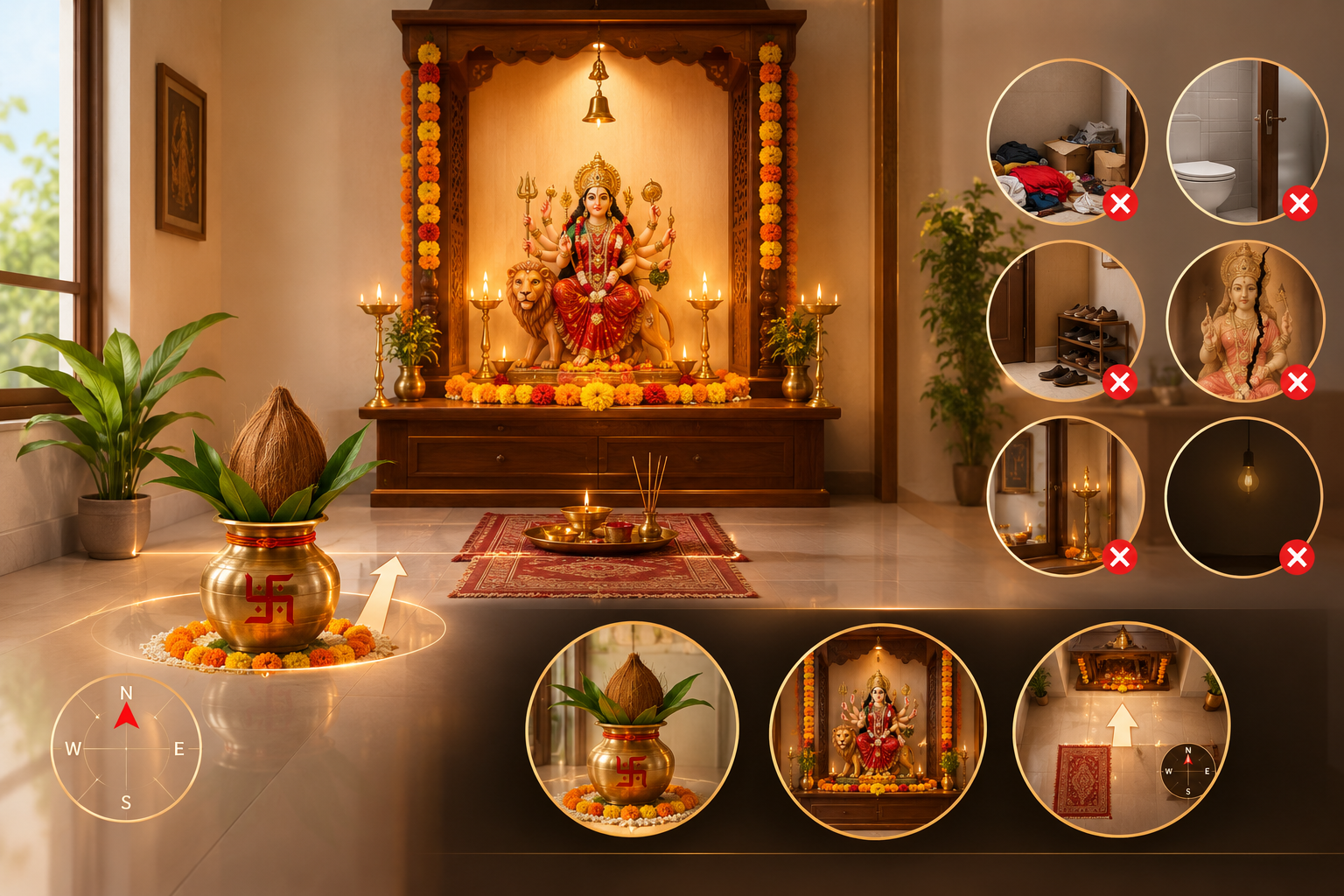
navaratri home mandir vastu comes down to three steps: remove what does not belong in the mandir, set the idol placement and kalash direction correctly, and keep the space clean and lit for all nine days. Before Sharad Navratri 2026 begins on 11 October, take out broken idols, dried flowers, old wicks, torn photos and stored clutter. Place the idol in the north east of the mandir on a raised platform, so you pray facing east or north. Keep the kalash direction towards the north east, beside the idol, and the diya in the south east. These steps need no renovation and work in a pooja room, a living room shelf or a small flat.
Navaratri home mandir vastu at a glance
- remove broken idols, torn photos, dried flowers, old ash and burnt wicks before ghatasthapana
- keep the mandir in the north east or east of the home, never under a staircase or against a bathroom wall
- follow the idol placement rule: raised platform, small gap from the wall, devotee facing east or north
- keep the kalash direction towards the north east, beside the idol, and do not move it for nine days
- place the diya, incense and akhand jyoti in the south east of the mandir
- use brass, copper, clay or wood, and avoid plastic and iron
- things to remove come first, placement comes second
- confirm the muhurat with your local panchang
why the home mandir needs a reset before navratri
a home mandir is used every day, so it slowly collects things: old flowers, extra idols, gift items, photos, ash, bills and the odd bottle of oil. Because the festival keeps the mandir busy for nine days, small problems show up fast. A cluttered shelf makes it hard to place the kalash, a cracked idol feels awkward during aarti, and a dark corner makes the whole ritual feel hurried.
navaratri home mandir vastu works as a simple reset. It asks you to clear the space first, then place things in the right zone, then keep a routine. It does not ask for a new temple or any construction. Whether you treat it as a belief, a tradition or just a tidy way to organise the festival, the steps are easy and cost very little.
Things to remove from the home mandir before navratri
the things to remove list is the step most people skip. Start here, before you bring in the kalash or the new flowers.
1. broken, cracked or chipped idols. Vastu tradition prefers idols in whole, clean condition. If an idol is damaged, replace it before the festival and respectfully immerse the old one in flowing water or place it under a peepal tree, as your family custom allows.
2. torn or faded photos. Remove frames with cracked glass, torn edges or faded images. Clean frames and clear images look better and are easier to focus on during aarti.
3. dried flowers and garlands. Old flowers should not stay in the mandir. Remove them daily during navratri and keep a small bowl for fresh ones.
4. old ash, wicks and incense stubs. Clear the diya plate, the incense stand and the ash tray. Burnt wicks and ash that sit for days make the corner look neglected.
5. extra idols. A crowded mandir with too many idols loses focus. Keep only the idols you actually worship, and avoid placing two idols of the same deity facing each other.
6. photos of departed family members. Many vastu guides suggest keeping ancestor photos out of the mandir and placing them on a south facing wall elsewhere in the home. Follow your family tradition if it differs.
7. stored items and clutter. Remove files, bags, keys, medicines, electronics, toys and any household items that have crept into the mandir shelf or the space below it.
8. plastic, iron and leather items. Replace plastic aasans and iron lamps with brass, copper, clay or wood. Do not keep leather items near the mandir.
9. expired prasad and old offerings. Clear leftover food and offerings before the festival begins, and replace them with fresh offerings.
10. dust, cobwebs and tangled wires. Wipe the walls and ceiling of the mandir, and tidy any loose electric wires from lights or speakers.
this list is also the best use of the first day of the festival. Once the mandir is clear, every other step in navaratri home mandir vastu becomes easier to follow.
How to clean the mandir step by step
these steps come right after the things to remove list.
- remove all idols, frames and items and place them on a clean cloth
- wipe the shelf or platform with a damp cloth, then dry it
- clean brass and copper items with a mild cleaner or tamarind and salt
- wipe each idol gently with a soft, dry cloth
- spread a fresh red or yellow cloth on the platform
- place the idols back one by one, starting with the main deity
- sprinkle a little Ganga jal around the mandir
Navaratri home mandir vastu: the best direction and location
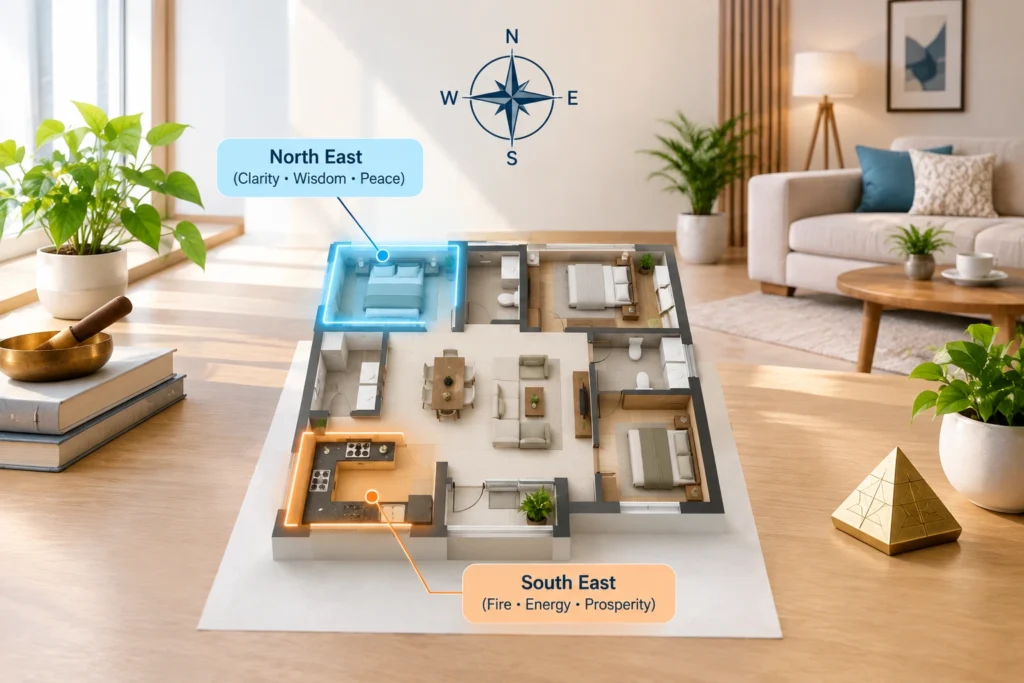
the north east, known as Ishan kona, is the preferred location for a home mandir in vastu. The east is the next best choice, and the north is also acceptable. Avoid the south and south west, a space under a staircase, and any wall that is shared with a bathroom or toilet. For the full direction guide, see our blog on mandir direction in home.
if you do not have a separate pooja room, set up a mandir on a wall shelf or a small table in the north east or east of the living room. Keep it raised from the floor, away from the main door and the shoe rack, and clear of heavy foot traffic.
Idol placement in the home mandir
navaratri home mandir vastu treats idol placement as the core of the setup, and it is simple. In vastu, the devotee faces east or north while praying, so the idol is placed in the north east of the mandir, facing west or south. Some families place the idol facing east, so follow your family or priest’s tradition and keep it the same for all nine days.
- place the idol on a raised platform, never on the bare floor
- keep a small gap between the idol and the wall, since good idol placement leaves breathing space
- keep the idol at a comfortable height, roughly at your chest level when you sit
- prefer small and medium idols, since oversized ones can overpower a small mandir
- do not place two idols of the same deity facing each other
- keep the Durga idol or image at the centre, with other deities placed beside it
for a deeper guide on Durga idol placement, see durga idol direction as per vastu. For idol height and material in a permanent mandir, see home mandir material and idol height.
Kalash direction in the home mandir
in navaratri home mandir vastu, the right kalash direction is the north east of the mandir, beside the idol. Most guides place it slightly to the right of the idol, and families differ on this, so keep the same position all nine days. Here is a simple way to set it up:
- spread a red or yellow cloth on a raised chowki in the north east
- place a small tray of clean soil or sand and sow barley seeds
- fill the kalash with clean water, durva grass, a coin and a little rice
- place mango leaves around the mouth and a coconut wrapped in red cloth on top
- place the kalash in the north east, beside the idol, during the morning muhurat
do not move the kalash after sthapana. Sprinkle a little water on the barley each morning and keep the pot away from direct heat. For the full ghatasthapana guide, see kalash sthapana and akhand jyoti vastu.
Diya, Incense and Akhand jyoti in the mandir
in vastu, fire belongs to the south east, so the diya, incense and akhand jyoti are placed in the south east of the mandir, not directly beside the idol. Use pure ghee or sesame oil and a thick cotton wick, and place the lamp on a small plate. Keep it away from curtains, paper decorations and the idol’s cloth. Check the lamp at regular intervals, and if you cannot watch an akhand jyoti for nine days, a simple diya at each aarti is safer and widely accepted. A safe lamp is part of navaratri home mandir vastu.
what to add to the mandir during navratri
once the space is clear, add only what the festival needs:
- fresh red hibiscus or marigold flowers, changed daily
- a clean red or yellow cloth on the platform
- a brass or copper lota with fresh water
- sandalwood paste, kumkum and rice for tilak
- a small bell and a conch
- a soft warm light in the mandir for evening aarti
colours and materials for the mandir
soft colours such as cream, light yellow, pale pink and light green suit the mandir walls. Red works well as an accent in the cloth and chunri, but works best in small amounts. Colours should support the idol placement, not compete with it. For materials, wood and white marble are common choices for the mandir unit, and brass, copper and clay are preferred for lamps, bells and lotas.
navaratri home mandir vastu in a flat or small space
in a small apartment, a free north east corner is not always available. Use a wall mounted shelf or a compact wooden unit in the east or north of the living room, and cover it with a light cloth when not in use. If the mandir sits in the kitchen, choose the north east corner of the kitchen, keep it covered during heavy cooking, and keep it away from the sink and the dustbin. In a rented home, navaratri home mandir vastu works without any change to the structure. For a layout review, see vastu without breaking walls.
A simple nine day mandir routine
- morning: clean the mandir, change the water and flowers, light the diya and do the aarti
- afternoon: keep the mandir uncluttered and water the barley and tulsi
- evening: light the entrance diya and mandir lamp and do the evening aarti
- night: switch off extra lights, check the lamp is safe and close the mandir
this routine keeps navaratri home mandir vastu simple, and each morning you can recheck the kalash direction and water.
After navratri: dussehra and what to do with old items
Sharad Navratri 2026 runs from 11 to 19 October, with Dussehra on 20 October, though tithi timings can shift, so confirm with your panchang. After the final aarti, follow your family custom for the kalash water, flowers and coconut. Do not throw puja items in the dustbin. Immerse flowers and old items in flowing water or place them under a tree, and clean the mandir so it is ready for Diwali.
common mistakes in navaratri home mandir vastu
most things to remove from the mandir stay there because nobody checks.
- keeping broken idols and dried flowers in the mandir
- placing the mandir in the south west or under a staircase
- placing the idol or kalash directly on the floor
- storing files, bags or medicines in the mandir shelf
- placing the lamp near curtains or paper decorations
- moving the kalash during the nine days
- changing the idol position midway
- using plastic or iron for puja items
dos and don’ts at a glance
a quick view of things to remove and things to keep.
| do | don’t |
| remove broken idols and dried flowers | leave old items in the mandir |
| keep the idol placement consistent for nine days | change the idol position midway |
| keep the kalash direction towards the north east | move the kalash after sthapana |
| place the diya in the south east | keep an open flame near curtains |
| use brass, copper, clay or wood | use plastic or iron |
| keep the mandir bright and tidy | store files or clutter in the mandir |
final thoughts
navaratri home mandir vastu is simple: remove what does not belong, place the idol correctly, set the kalash direction towards the north east, keep the diya in the south east, and follow a short daily routine. The things to remove matter as much as the things to add, so do the cleaning first. These steps take a weekend to set up and a few minutes each day, and they make the festival easier to follow.
FAQ
what is navaratri home mandir vastu?
It is the set of vastu guidelines for preparing your home mandir for Navratri, including cleaning it, removing unwanted items, placing the idol and kalash in the right zone, and keeping the diya in the south east.
which things should be removed from the home mandir before navratri?
Remove broken idols, torn photos, dried flowers, old ash and wicks, extra idols, expired prasad, plastic and iron items, and any stored clutter such as files or bags.
what is the correct kalash direction for navratri?
The north east of the mandir, beside the idol, on a raised platform. Do not move it during the nine days.
which direction should the idol face in the home mandir?
Most vastu guidance places the idol in the north east, facing west or south so that you pray facing east or north. Some families place it facing east, so follow your family tradition and keep it consistent.
can i keep photos of ancestors in the mandir?
Many vastu guides suggest keeping ancestor photos out of the mandir and placing them on a south facing wall elsewhere in the home, though family customs can differ. Photos of ancestors are among the things to remove from the mandir in many vastu guides.
what should i do with broken idols?
Respectfully immerse them in flowing water or place them under a peepal tree, following your family custom. Do not throw them in the dustbin.
where should the diya be placed in the mandir?
In the south east of the mandir, on a small plate, away from curtains and paper decorations.
can i set up a mandir in the living room for navratri?
yes. A clean wall shelf or table in the north east or east of the living room works, as long as it is raised, bright and away from the shoe rack and bathroom wall.
can i keep a mandir under the staircase?
navaratri home mandir vastu advises against it, since the area is considered less suitable for prayer. Choose the north east or east instead.
how often should i clean the mandir during navratri?
clean it every morning before the first aarti, changing the water and flowers and removing burnt wicks.